
Punjabi Wedding Traditions: Rituals That Make a Rishta Sacred
A Punjabi wedding is never a single day. It is a season — of songs, of colour, of relatives who arrive with laughter and refuse to leave until every ritual has been honoured. Each tradition carries centuries of meaning. Understanding them is the first step to honouring them.
Roka and Thaka — the promise
The Roka is where the journey formally begins. Both families meet, exchange sweets and shagun, and quietly agree: this rishta is right. From this moment, the boy and girl are "roka" — set aside for one another. The Thaka that often follows is a slightly larger gathering where the engagement is announced to the extended family.
Chunni Chadhana and Kurmai — the engagement
The groom's family arrives at the bride's home carrying a chunni — a red or pink dupatta embroidered with gold. The eldest woman of his family drapes it over the bride's head, welcoming her as a daughter of their home. The kurmai (ring ceremony) usually follows the same day.
Sagai, Sagan and Shagun
The bride's family visits the groom's home with dry fruits, sweets, clothes, and a tilak. This is Sagan — a formal blessing that the boy is now part of their family too. The exchange of shagun (auspicious gifts) begins here and continues through the wedding.
Sangeet and Ladies Sangeet — the music
The sangeet is where a Punjabi wedding truly announces itself. Dholkis come out, cousins choreograph dances weeks in advance, and boliyaan — traditional Punjabi couplets — are sung by the women late into the night. It is joy in its most unfiltered form.
Mehndi and Maiyan
On the mehndi day, henna is applied to the bride's hands and feet — the deeper the colour, the deeper the love, elders say with a smile. The Maiyan or Vatna ceremony follows, where turmeric, mustard oil, and gram flour are gently applied to both the bride and groom (in their own homes) to bless their skin with a wedding glow.
Chooda and Kaleere — a mother's blessing
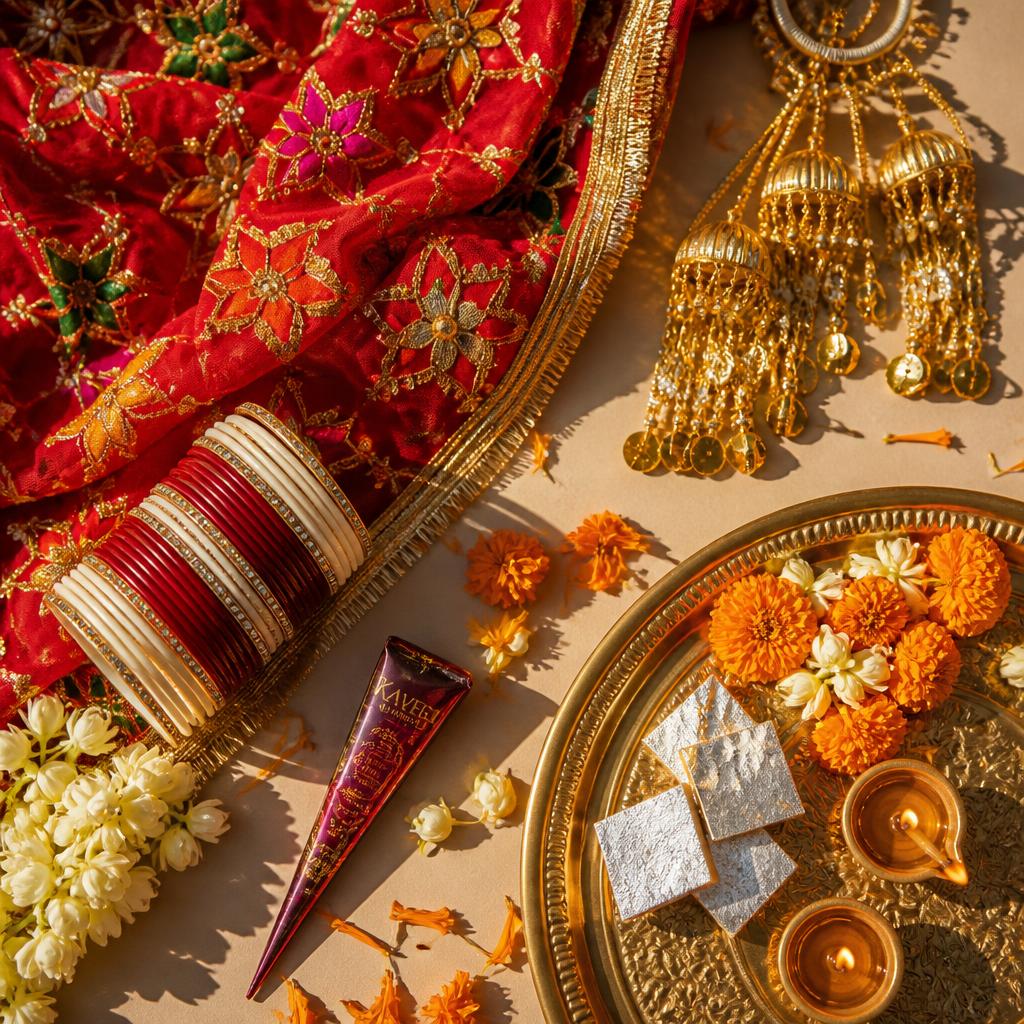
The morning of the wedding, the bride's maternal uncle (mama) presents her with the chooda — a set of red and ivory bangles she will wear for weeks after the wedding. Her sisters and cousins then tie kaleere — golden umbrella-shaped ornaments — to her wrists. Tradition says whichever unmarried girl a kaleera falls onto will be the next to marry.
Ghara Ghardoli and Sehrabandi
Before leaving for the wedding, the groom's sisters and sisters-in-law bring water from a nearby gurdwara or temple for his ceremonial bath (Ghara Ghardoli). The Sehrabandi follows, where a sehra — a veil of flowers or beads — is tied over the groom's turban by his father and elder brothers.
Milni — the meeting of families
At the venue, the two families formally meet. Elders are matched by relation — father with father, uncle with uncle — exchanging garlands and shagun. It is a beautiful reminder that a Punjabi wedding is a marriage of two families, not just two people.
Anand Karaj or Phere — the ceremony
For Sikh families, this is the Anand Karaj — four Laavan walked around the Guru Granth Sahib. For Punjabi Hindu families, it is the saat phere around the sacred fire. In either, the essence is the same: two souls promising to walk together.
Doli — the farewell
The most tender ritual of them all. The bride throws handfuls of rice back over her shoulder — a symbolic return of her parents' gifts of love — before stepping into the doli that carries her to her new home. Tears flow freely. They are not sad tears alone; they are the tears of a threshold crossed.
Pani Bharna and Muh Dikhai
At the groom's home, the bride is welcomed by her mother-in-law with an aarti. She gently kicks a kalash of rice at the threshold — a gesture that she brings abundance into this home. In the days that follow, the Muh Dikhai (face-showing) ceremony lets the extended family greet the new bride and offer their shagun.
Honouring tradition in a modern rishta
Every family adapts these rituals to their own rhythm — some compress the timeline, others honour every step. There is no one right way. What matters is that the meaning is not lost in the choreography. At Veere Di Wedding, we work with families who want a rishta rooted in these traditions — and a partner who understands why they matter.
Reach out to our team — we would love to hear your family's story.
Begin your matchmaking journey
Speak with our team — we would be honoured to listen first.
Find Your Match