
Anand Karaj: The Sikh Wedding Ceremony Explained
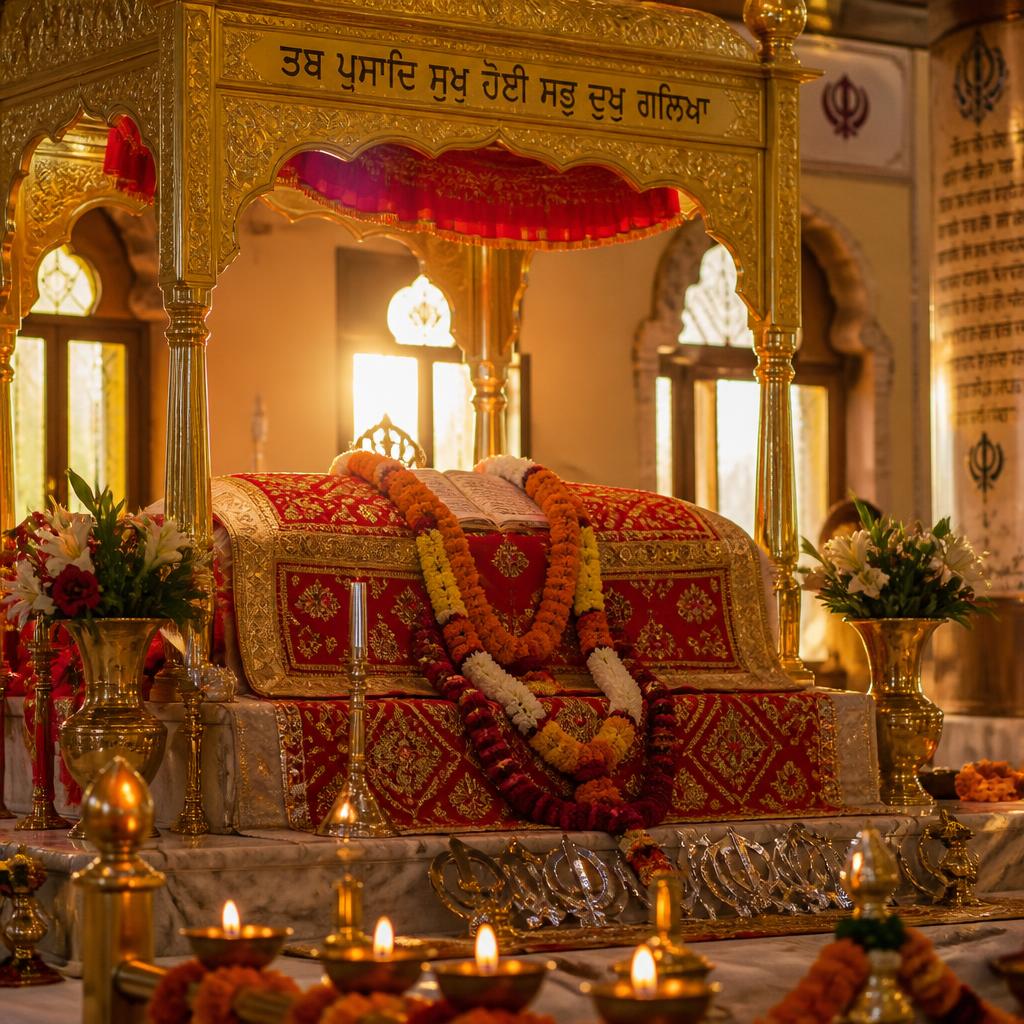
The Anand Karaj — literally the "ceremony of bliss" — is the sacred rite through which two Sikhs are joined in marriage before the Guru Granth Sahib Ji. It is short, luminous, and deeply spiritual. In under an hour, two families and two souls are woven into one journey.
What Anand Karaj means
Anand Karaj was formalised by Guru Amar Das Ji and later given legal recognition through the Anand Marriage Act of 1909. Unlike ceremonies that centre a fire or a priest, the Anand Karaj centres the eternal Guru — the Guru Granth Sahib Ji — as witness. The couple does not marry each other so much as they walk together around the Guru, promising a shared journey toward the Divine.
When and where it takes place
The ceremony is held in the morning, in a gurdwara or any clean, respectful space where the Guru Granth Sahib is installed with proper maryada. Both families arrive after the milni — the meeting of elders — and gather in the darbar sahib. Shoes are removed, heads covered, and the sangat sits together on the floor as equals.
The four Laavan — the heart of the ceremony
The Anand Karaj is built around four hymns composed by Guru Ram Das Ji, known as the Laavan. Each is read aloud, then sung by the ragis as the couple walks slowly around the Guru Granth Sahib — the groom leading, the bride following, connected by a palla (a saffron scarf placed over the groom's shoulder and held by the bride).
- First Laav — the calling. The couple accepts the duty of a householder's life rooted in dharma. Marriage is framed not as escape, but as a spiritual path.
- Second Laav — the longing. The soul begins to feel love for the Divine. The couple's love for each other becomes a doorway to something larger.
- Third Laav — the detachment. The heart lets go of ego and worldly attachment. Love matures into service.
- Fourth Laav — the union. The soul merges with the Beloved. The couple, now walking as one, arrives at anand — bliss.
After the four rounds, ardaas is offered, karah prasad is served, and the sangat blesses the couple. That is the whole ceremony. No fire, no seven vows, no lengthy rituals — only the Guru's word.
What to expect if you are attending
- Cover your head with a rumal, dupatta, or scarf. Everyone does — Sikh, non-Sikh, guest, family.
- Sit on the floor, not on chairs, as a mark of respect and equality.
- Arrive on time. The ceremony is short; latecomers miss the essence.
- No alcohol, no meat, no tobacco on the gurdwara premises.
- Photography is usually allowed from a respectful distance — always ask the granthi first.
Anand Karaj and modern Sikh matrimony
For families searching for a Sikh life partner today, the Anand Karaj is not just the wedding day — it is the destination that shapes the whole search. Families ask: will this rishta lead to a home where the Guru is centred? Will our children raise their children in this light?
A thoughtful Sikh matchmaker holds this question quietly through every introduction. Compatibility of career, city, and lifestyle matters — but so does the shared willingness to walk around the same Guru.
Begin your journey
If your family is searching for a Sikh life partner, we would be honoured to listen first. Speak with our team — every conversation begins with your family's story, not a database.
Begin your matchmaking journey
Speak with our team — we would be honoured to listen first.
Find Your Match